Why Do Cotton Socks Cause Blisters When Running? (Prevention Guide)
Cotton socks trap moisture against your skin, increasing friction by up to 50% and causing the outer layers of your epidermis to separate—forming painful, fluid-filled blisters.
Key Takeaways
- Cotton absorbs sweat and holds it against your skin—that damp friction is what separates the skin layers and forms a blister
- Moisture-wicking socks (polyester, nylon, or merino wool) pull sweat away from your feet and cut blister risk dramatically
- Proper shoe fit plus a preventative lubricant like Body Glide completes the blister-prevention system
Cotton socks trap sweat against your skin, driving up friction by as much as 50% and rubbing the outer layers of your skin apart—that's a blister. Switch to moisture-wicking synthetic or merino wool socks, make sure your shoes fit right, and put a lubricant like Body Glide on blister-prone spots.
The "Yes, But..." Reality
Yes, the science is simple—cotton traps moisture. But here's the reality: most runners don't find out their socks are the problem until they've suffered through miles of pain.
I've coached athletes at every level, from elementary school state champions to national qualifiers, and sock choice is one of the first conversations we have. It sounds trivial—until you've watched a talented runner drop out of a race over foot damage that was completely preventable.
Why Cotton Fails Runners: The Moisture Problem
| Sock Material | Moisture Behavior | Friction Level | Blister Risk |
|---|---|---|---|
| Cotton | Soaks it up and holds it against your skin | High (wet fibers cling) | Very High |
| Polyester/Nylon | Pulls it away from your skin | Low | Low |
| Merino Wool | Pulls sweat away + regulates temperature naturally | Very Low | Very Low |
| Cotton-Blend (50%+) | Still soaks up plenty | Moderate-High | Moderate-High |
Cotton works like a sponge inside your shoe. It soaks up sweat, rain, and puddle water, then holds all of it right against your skin.
Wet cotton fibers lose their softness. They turn rough and clingy, and every footstrike grinds that damp fabric against your skin.
The Science: How Blisters Actually Form
Your skin is built in layers, with the outer layers anchored to the tissue underneath. Too much friction—like wet cotton rubbing with every step—shears those outer layers loose from the deeper ones.
The pocket fills with clear fluid, and that's your blister. It's your body's emergency padding against damage that won't stop.
Here's the part I want you to hold onto: remove the friction, and you remove the blister.
Field Notes: What I Tell Every Athlete
Coaching runners across Central Florida—from FLYRA state champions to New Balance Nationals qualifiers—I see the same pattern over and over. Athletes show up in cotton socks because that's what they wore for school, for basketball, for everything. Within two weeks of serious training, the blisters arrive.
The fix is immediate. I require technical socks for every workout. No exceptions.
The athletes who switch see results within days. The ones who resist learn the hard way on their first long run or race.
A middle school athlete I coach—now a state champion—came to me with heel blisters that had dogged her a full season. Her old routine was an elaborate taping ritual before every run. We switched her to synthetic moisture-wicking socks and fitted her for the right size trainers. The blisters stopped. Completely. No tape required.
The Complete Blister Prevention System
1. Technical Socks (Non-Negotiable)
Buy socks made for running. Look for polyester, nylon blends, or merino wool. Brand matters less than material.
Coach's Tip: Flip the label before you buy. If cotton is the first fiber listed, those are casual socks, not running socks. Leave them in the drawer.
Coach Darrin's Favorite Running Socks
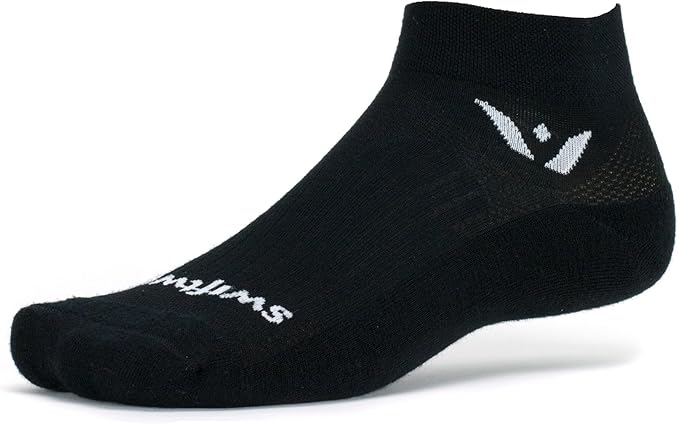
After testing dozens of running socks across thousands of training miles with my athletes, Darn Tough Merino Wool Run No Show Tab Lightweight keeps beating everything else in our rotation.
Why these work:
- Merino wool naturally wicks moisture while regulating temperature in both heat and cold
- Seamless toe construction removes the friction point that causes blisters between your toes
- Lifetime guarantee – Darn Tough replaces worn socks for life, so you buy them once
- No-slip tab stays put on long runs without cutting into your Achilles
These are the socks I recommend to every athlete in my program, from middle schoolers running their first 5K to national-level competitors. They cost more than synthetics up front, but the durability and blister prevention make them worth every dollar.
Disclosure: This is an affiliate link. We earn a small commission if you purchase, at no additional cost to you. We only recommend gear we actually use with our athletes.
2. Proper Shoe Fit
Too loose and your foot slides. Too tight and you get pressure points. You want a snug fit with about a thumb's width between your longest toe and the front of the shoe.
Go to a specialty running store for a proper fitting. It's worth the trip.
3. Preventative Lubricants
Body Glide, Vaseline, or an anti-chafe balm puts a slick barrier between your skin and trouble. Rub it on your known hotspots before you run: heels, ball of the foot, between the toes.
This matters most on long runs, on race day, and any time you're breaking in new shoes.
4. The Hotspot Rule
That faint tingle or burn during a run? That's a hotspot—skin under stress, right before the blister forms.
Stop right away. Tape it, cover it with moleskin, or grease it up. Run through a hotspot and I promise you'll finish with a blister.
5. New Shoe Protocol
Break in new trainers with shorter runs first. Your feet and the shoes need time to adapt to each other.
Heading straight out for a long run in fresh shoes is asking for trouble.
When to Seek Medical Help
Most blisters heal on their own within a few days. Leave small ones intact—the fluid protects the new skin healing underneath.
See a doctor or podiatrist if you notice:
- A very large blister causing significant pain
- Signs of infection: spreading redness, swelling, warmth, or pus
- A blister that won't heal after 7-10 days
- Blisters that keep coming back in the same spot despite prevention
The Bottom Line
Cotton socks have no place in your running drawer. The moisture they trap creates exactly the conditions a blister needs to form.
The fix is simple and cheap: technical fabrics, shoes that fit, and a lubricant when you need it. Your feet carry you through every mile—treat them well.
Ready to dial in the rest of your race-day setup? My Half Marathon Gear Checklist covers the full kit.
Frequently Asked Questions
- Are cotton socks bad for running?
- Yes. Cotton absorbs sweat and holds it against your skin, and wet cotton fibers become rough and clingy. That combination roughly doubles friction on your feet, which is why cotton socks are the leading gear-related cause of running blisters.
- Why do cotton socks cause blisters?
- Cotton traps moisture against your skin. The damp fabric increases friction with every footstrike, and that repeated rubbing separates the outer layers of your skin. The pocket fills with fluid, forming a blister — usually on the heel, toes, or ball of the foot.
- What socks should I wear for running instead of cotton?
- Choose moisture-wicking synthetics (polyester or nylon) or merino wool. Both pull sweat away from the skin instead of holding it, dramatically lowering friction. Look for a snug fit with no bunching — running-specific socks typically cost $10–18 a pair and last for hundreds of miles.
- Do cotton-blend socks also cause blisters?
- Blends with 50% or more cotton still absorb enough moisture to raise blister risk. If the label lists cotton as the first material, save the pair for casual wear and run in fully synthetic or merino socks instead.
Related Articles
Mandatory Medical Disclaimer
A Faster 5K provides training content, race strategies, and physiological calculations for educational purposes only. Running and endurance sports carry inherent physiological risks, including musculoskeletal injury and cardiovascular stress. Always consult with a qualified healthcare professional or physician before beginning any new physical training regimen, especially if you have pre-existing medical conditions or are returning from injury. All training programs provided on this site are followed at the user's own discretion. The use of any information provided on this platform is solely at your own risk.